
By Djamel Ben Ali
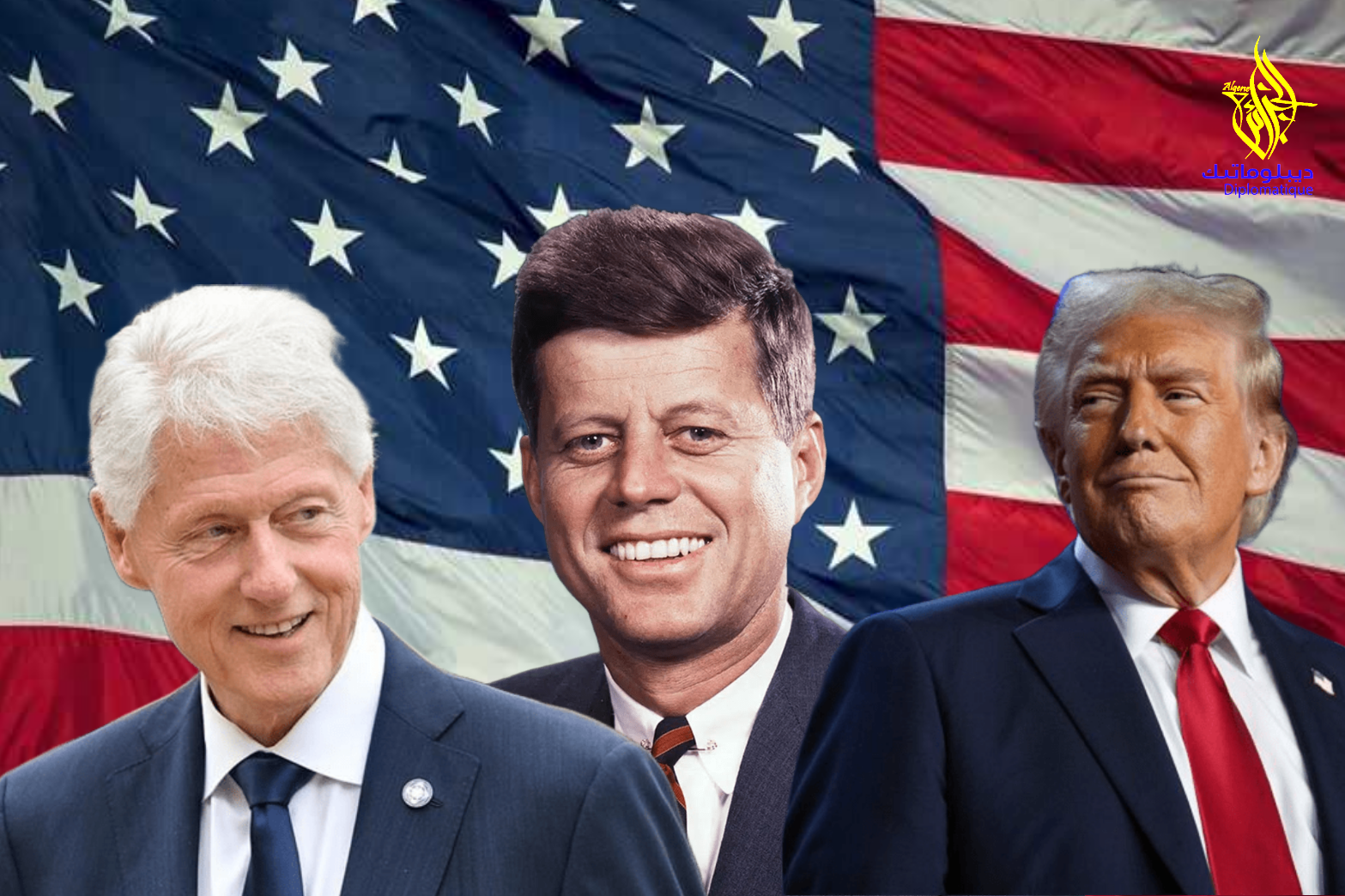
For more than half a century, American politics has been intertwined with what are commonly labeled “pink scandals,” not as mere personal failings, but as a deep phenomenon reflecting the nature of the system, the relationship between power and the media, and the state’s capacity to absorb shocks. From Kennedy and Marilyn Monroe, to Clinton and Monica Lewinsky, up to Trump and the Jeffrey Epstein case, the names change while the lessons repeat: is power in the United States judged by morality or by results?
American Politics Between Morality and Results: A History of Pink Scandals
In the 1960s, John F. Kennedy symbolized modern American charisma. Despite persistent rumors about his private life, the media remained largely silent, not out of ignorance, but from an implicit understanding that protecting the presidency’s image was part of maintaining state stability. At that time, the prestige of the system outweighed public curiosity, and politics stood above media intrusion.
From Kennedy to Trump: Scandals as a Test of Systemic Strength
By the end of the twentieth century, the Clinton–Lewinsky affair erupted, becoming a major political and constitutional crisis. The media were no longer silent witnesses but active participants, and public opinion became a permanent tribunal. Yet the presidency survived. Clinton maintained high popularity, confirming a key rule in American political culture: voters may forgive moral failings, but they rarely forgive strategic or economic failure.
Power, Media, and Scandal: The Hidden Face of American Politics
With Trump, scandals became a tool. They were no longer just personal missteps but political weapons aimed at the elite and the “deep state.” Cases linked, directly or indirectly, to Jeffrey Epstein exposed dark zones within power structures, where politics, money, and networks of protection intersect. Here, scandal ceased to be a threat and became part of the very mechanism of negotiating power.
Washington Unmasked: How Power Coexists with Scandals
Remarkably, the repetition of these scandals does not weaken the system; it reveals its strength. Politics in Washington is highly personalized, the media operates with few enduring boundaries, and society consumes the downfall of leaders as much as it revels in their rise. The state, meanwhile, demonstrates an exceptional capacity to absorb crises and turn them into transitional episodes in a long narrative of power and dominance. In the American experience, strength is not measured by moral purity but by resilience, and scandals are not mere side stories—they are a parallel language of governance through which battles are fought and legends are forged.