Actualités
Diplomacy at the Iftar Table: Saudi Ambassador in Algiers Hosts Political and Media Figures in a Ram... The UAE and the Engineering of Systematic Chaos: Planting Discord, Looting Resources, and Destabiliz... Algérie/Royaume-Uni Un forum, une exposition et une rencontre à la Chambre des Lords pour dynamiser ... Déclaration de Son Excellence l'Ambassadeur Ben Jamaa Ammar devant le Conseil de sécurité Norway pleads for the entry of humanitarian aid into Gaza Visite du ministre de la Santé à Oum El Bouaghi : réponse rapide et action sur le terrain après l’in... Les échos positifs de la nomination du professeur Mohamed Seddik Aït Messaoudene comme ministre de l... La norvége condamne l'agression israélienne contre qatar Norway condemns the aggression against Qatar The Embassy of India in Algeria celebrates the 79th Independence Day of India Le Chargé d’Affaires de l’ambassade de France en Algérie convoqué au ministère des Affaires Etrangèr... La Norvège contribue à hauteur de 200 millions de couronnes norvégiennes à l'aide budgétaire à la Pa... Norway contributes NOK 200 million in budget support to Palestine Algerian Television Triumphs with Five Awards at the Arab Festival under Mohamed Baghali’s Leadershi... La télévision algérienne brille au Festival arabe et remporte cinq prix prestigieux sous la directio... Cour africaine des droits de l’Homme : la magistrate Chafika Bensaoula élue vice-présidente Sahara occidental: l'Algérie regrette le soutien du Royaume-Uni au prétendu plan d’autonomie marocai... Les officines françaises poursuivent la gestion des relations algéro-françaises par des fuites organ... Timor-Leste : le droit du peuple sahraoui à l'autodétermination réaffirmé avec force au séminaire an... «Peut-être»: Donald Trump Junior n'exclut pas de se présenter à la présidence un jour
Opinions et analyses

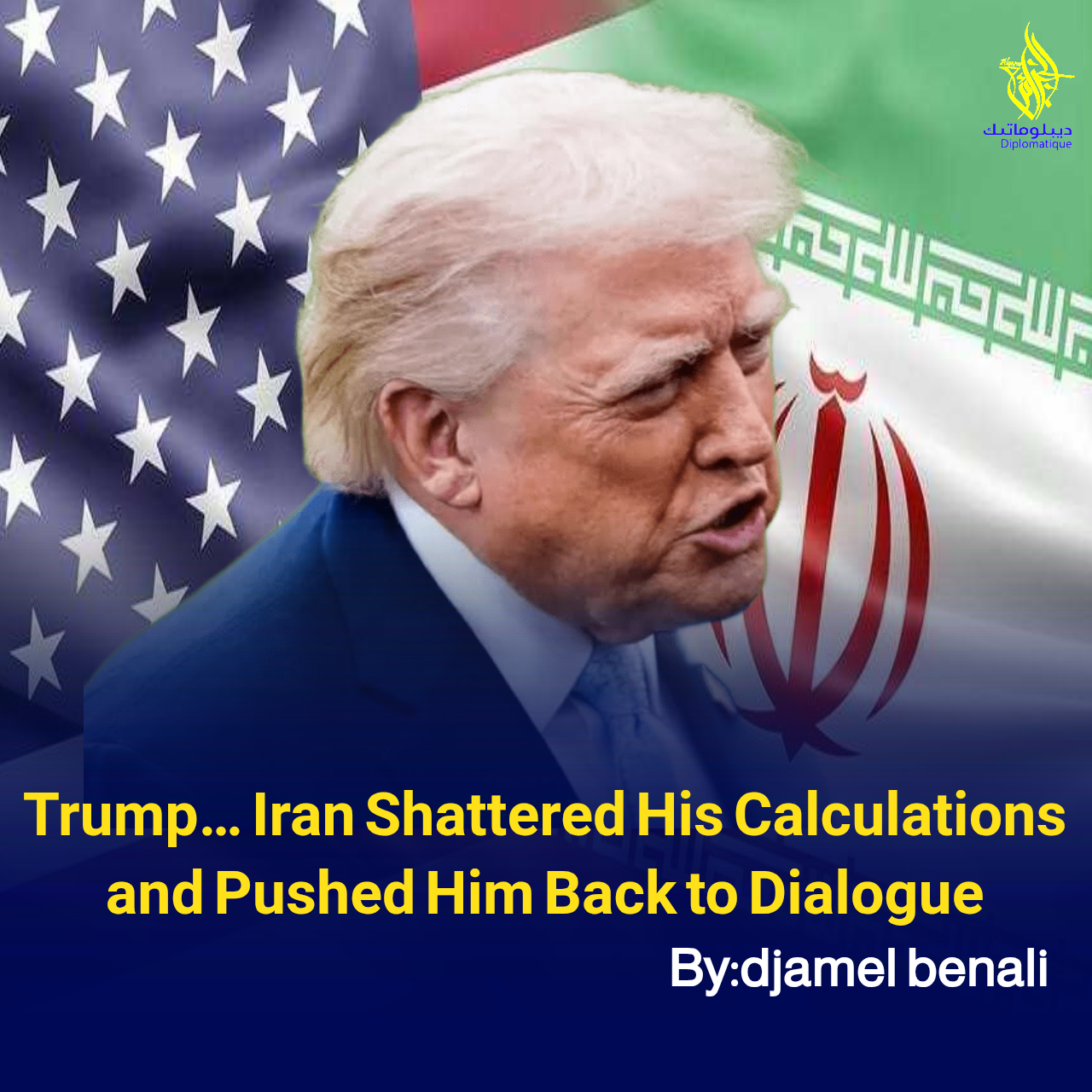
Trump… Iran Shattered His Calculations and Pushed Him Back to Dialogue
By:djamel benali
It was not in Donald Trump’s calculations that the balance of deterrence in the Middle East could shift so quickly, nor that his carefully crafted strategy would unravel into visible strategic confusion. He had wagered on a familiar script: a swift strike, a limited response, and internal pressure within Iran leading to political fracture—or at least weakening the system. What unfolded, however, defied every expectation.

Trump’s first miscalculation lay in underestimating Iran’s capacity to respond. He did not anticipate that Tehran would extend its reach toward U.S. bases in the region, turning them into potential targets within a new deterrence equation. The Iranian missile signals were not merely military—they were profoundly political: a clear assertion of presence and capability. In that moment, the assumption of uncontested dominance began to erode.

The second failure was a misreading of Iran’s internal cohesion. Trump had bet heavily on economic pressure and sanctions igniting widespread unrest against the system. Instead, external threats appeared to consolidate segments of the Iranian public around the notion of sovereignty. This relative unity undermined a central pillar of Washington’s strategy: leveraging internal dissent as a tool of pressure.

The third, and perhaps most consequential, misjudgment was about time. Iran was not expected to endure prolonged, multi-layered pressure—military, economic, and psychological. Yet its resilience transformed time itself from a weapon of coercion into an asset of resistance.

When Trump escalated his rhetoric, threatening to strike energy infrastructure and power generation facilities while issuing a 48-hour deadline, the situation seemed to edge toward a broader confrontation. But what followed exposed the limits of that escalation. The subsequent retreat was not merely tactical—it reflected a deeper realization that the cost of an open confrontation with Iran had been dangerously underestimated.

The logic of force collided with geopolitical realities. Iran is no easy target; its regional networks and missile capabilities make any large-scale military gamble highly risky. Moreover, targeting energy infrastructure would have jeopardized global oil market stability, potentially drawing major international actors into the crisis, even if indirectly.

Ultimately, Trump found himself facing two choices: escalate into uncertainty, or pivot toward dialogue. He chose the latter—reluctantly. Here lies the paradox: a leader who rose on a platform of confrontation was pushed toward negotiation, not from a position of absolute strength, but from one of recalibration.

What unfolded was not a fleeting episode of tension, but a revealing moment in the shifting balance of power. Iran demonstrated that deterrence is no longer monopolized by a single actor, and that modern conflicts are not decided by military power alone, but by resilience, strategic patience, and the ability to impose new equations on adversaries.

Between threats that never materialized and missiles that redrew red lines, Trump was confronted with an unexpected reality: the Middle East is no longer an open arena for unilateral decisions, and the era of striking without consequence has come to an end.
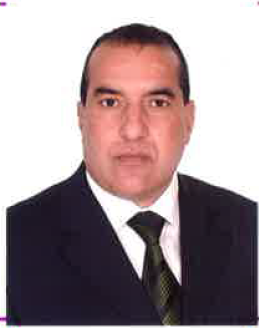
Djamel Benali

Journaliste, fondateur et directeur général d'Algérie Diplomatique Journaliste et membre fondateur de l'hebdomadaire Al-Shorouk Al-Arabi 1991-1994 Correspondant d'Al-Shorouk à Washington 1997 Journaliste spécialiste chargé des dialogues politiques 2002 Rejoint la télévision publique algérienne - Enquêteur - Monteur 2003-2013, Rédacteur en chef d'une émission à la une, producteur et animateur d'une émission dans le contexte 2009-2011 Rédacteur en chef central des émissions spécialisées et des grands reportages 2009-2014 Producteur de talk-shows Rencontre hebdomadaire pour la télévision algérienne Journaliste chargé des dialogues politiques et diplomatiques 2014-2019 Membre fondateur de Desire News Channel et rédacteur en chef central des émissions spécialisées et des grands reportages 2016-2018 Directeur des Programmes Spécialisés et des Grands Reportages chez Al Shorouk News Channel 2016 Fondateur et directeur général du site d'information algérien Diplomatic en arabe et en français 2020-2021 Directeur et fondateur du nouveau site d'information de la télévision algérienne, producteur et présentateur de programmes (Dibergtg) 2021 affecté à une mission auprès du directeur général de la télévision algérienne. Collaborateur de plusieurs journaux nationaux et arabes. Message de l'Atlas, Voix du Libre - Echo des stades - Ecrivain arabe - Correspondant de la télévision Al-Sa'a d'Algérie - représentant littéraire de Mme Anissa Boumediene, veuve de feu le Président Houari Boumediene 1994-1996 : Conseiller média du champion du monde et olympique Noureddine Morsli de 1993 à 2000. Auteurs : Auteur de 'Témoins et Bilan', présenté par Abdel Hamid Mahri. Dr Talib Ibrahimi Livres imprimés : avant la conversation. Entrevues télévisées.

Articles similaires

Laisser un commentaire

Votre adresse e-mail ne sera pas publiée. Les champs obligatoires sont indiqués avec *

quatre − un =

Bouton retour en haut de la page